Random drug and alcohol testing remains one of the most effective workplace safety strategies for employers seeking to reduce substance-related incidents, improve compliance, and maintain productivity. A well-designed testing program helps organizations apply testing fairly, document results properly, and support a safe work environment while meeting industry-specific regulatory requirements.
In This Guide
- What Is Random Drug and Alcohol Testing at Work?
- How to Create a Random Drug and Alcohol Testing Policy
- How Employers Should Handle Random Drug and Alcohol Testing Issues
- DOT vs Non-DOT Random Drug Testing Requirements
- Best Practices for Managing a Random Drug and Alcohol Testing Program
- Key Takeaways for Building a Compliant Random Drug Testing Program
What Is Random Drug and Alcohol Testing at Work?
Random drug and alcohol testing at work is an unannounced screening program where employees are selected for testing through a scientifically valid random process. Employees have an equal chance of being chosen regardless of position, tenure, or performance.
How Random Drug Testing Works in the Workplace
Employers typically use software-generated selections or third-party administrators to conduct random drug testing fairly. Once selected, employers notify employees discreetly, and they must report immediately for specimen collection.
Testing dates remain unpredictable throughout the year. This approach helps maintain the deterrent effect of a random drug testing program while supporting compliance requirements.
How Random Alcohol Testing Works for Employees
Unlike drug tests, random alcohol testing targets specific timeframes. Employers can select and test employees only before, during, or immediately after they perform safety-sensitive functions. Employers administer a breathalyzer test — or an approved saliva screening device — to measure the employee’s current Blood Alcohol Concentration (BAC).
To support workplace alcohol screening programs, DrugTestsInBulk provides employer-grade alcohol testing solutions for both DOT and non-DOT compliance, helping HR teams and safety managers maintain fast, reliable, and scalable testing workflows.
PreScreen Plus Alcohol Saliva Test
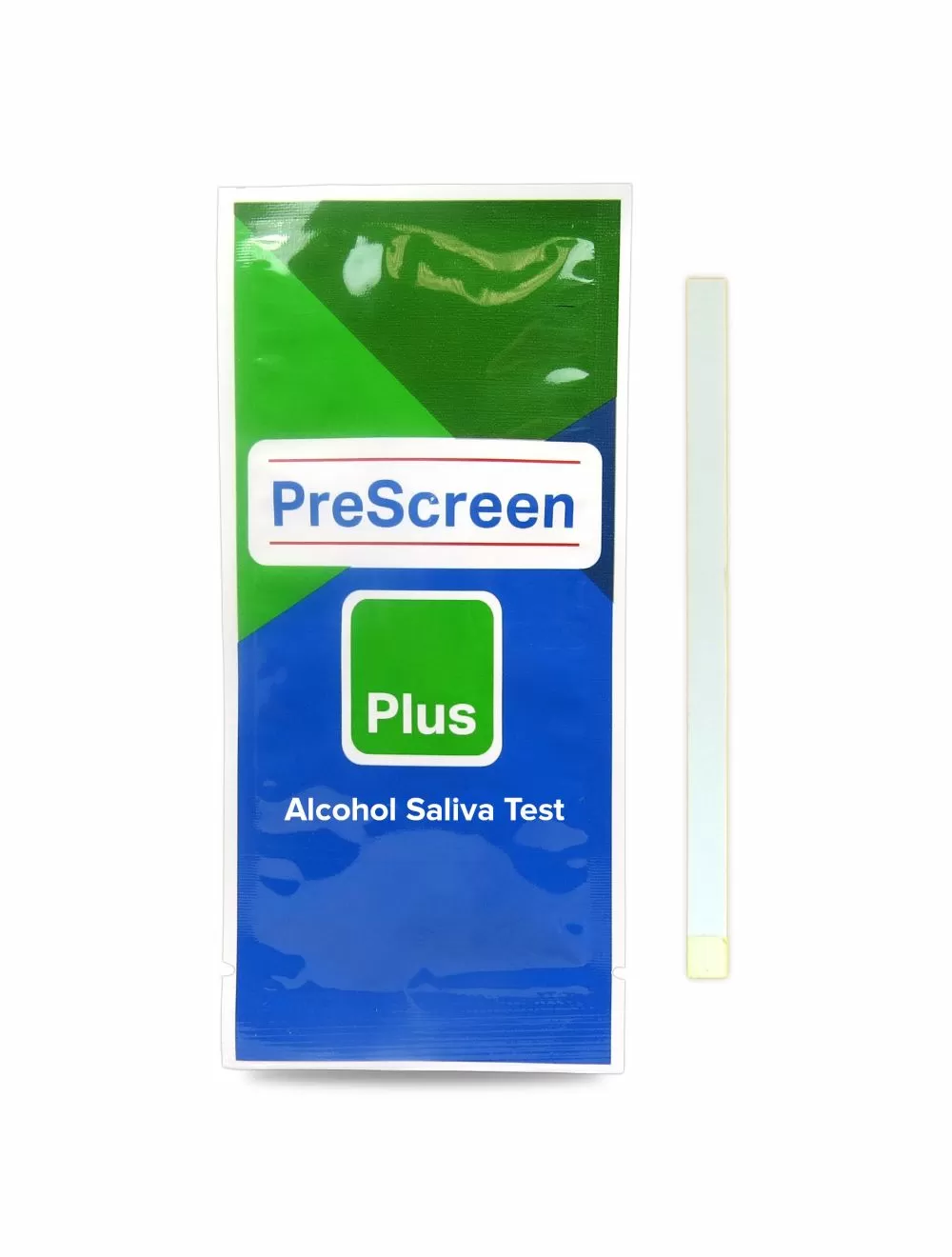
- Rapid mouth swab alcohol test
- Results in ~2 minutes
- 5 detection levels (.00%, .02%, .08%, .15%, .30%)
- 12-month shelf life
Random vs Reasonable Suspicion vs Pre-Employment Drug Testing
There are three core testing types employers commonly use:
- Random Testing: Unannounced, computer-generated selection with equal probability for all employees. Designed for general deterrence.
- Reasonable Suspicion Testing: Triggered by specific, contemporaneous observations by trained supervisors (e.g., changes in behavior, odor of alcohol, slurred speech).
- Pre-Employment Testing: Conducted before hiring or upon transferring into a safety-sensitive role.
Industries That Commonly Require Random Drug Testing
Several industries require or strongly encourage random drug screening programs because of public safety concerns. Common industries include:
- Transportation
- Aviation
- Railroads
- Construction
- Manufacturing
- Healthcare
- Oil and gas
- Pipeline operations
Federal agencies often establish minimum annual testing rates for regulated employees working in safety-sensitive positions.
How to Create a Random Drug and Alcohol Testing Policy

A successful program starts with a well-documented policy that outlines procedures, expectations, and employee responsibilities.
What Should a Random Drug Testing Policy Include?
A comprehensive policy provides transparency and prevents discrimination claims by establishing clear, documented procedures. Your policy must include:
- Business Justification: A statement explaining the program’s purpose (e.g., maintaining workplace safety, ensuring regulatory compliance).
- Scope & Testing Pool: Exactly who is subject to random testing (e.g., specific departments, safety-sensitive roles).
- Selection Methodology: How employees are chosen — typically via a third-party or computer-generated random selection method where everyone has an equal chance.
- Testing Frequency: The frequency of selections (e.g., monthly, quarterly, or meeting the annual percentage thresholds for DOT compliance).
- Prohibited Substances: A clear list of banned substances, including marijuana, illicit drugs, and alcohol impairment rules.
- Consequences: Specific disciplinary actions for positive results, tampering, or refusing to submit.
- Support Resources: Information on an Employee Assistance Program (EAP) or substance abuse counseling.
Employee Notification and Consent Requirements
Employee awareness is a foundational compliance requirement for workplace drug screening.
- Prior Notice: Employers must notify staff that random testing is being implemented before the program starts.
- Written Consent: Employees must sign a formal acknowledgment form confirming they received, read, and agree to the policy—a requirement frequently imposed under the FCRA and state laws.
- Unannounced Notification: Notify employees discreetly and immediately before the test to prevent tampering.
Chain of Custody Forms and Documentation Requirements
A strict Chain of Custody (COC) ensures specimen integrity from collection through the final laboratory result.
- Standard COC Forms: Document all collections using a standard paper or electronic Custody and Control Form.
- Tracking Signatures: Every individual handling the specimen must sign the form and document the date and time.
- Record Keeping: Keep all testing records strictly confidential and store them separately from the employee’s general personnel file.
Random Drug Testing Policy PDF and Template Examples
Having a written document is vital for compliance and protecting your business. Review sample guidelines from the U.S. Department of Transportation if your workers fall under DOT safety-sensitive regulations.
General corporate resources, such as the Lattice Drug Testing Policy Template, can also help you build a customized company policy.
Choosing the Right Drug Testing Supplies for Workplace Screening
Selecting appropriate testing supplies ensures accurate results and regulatory compliance for your random drug screening program. Quality matters significantly when choosing materials for workplace testing.
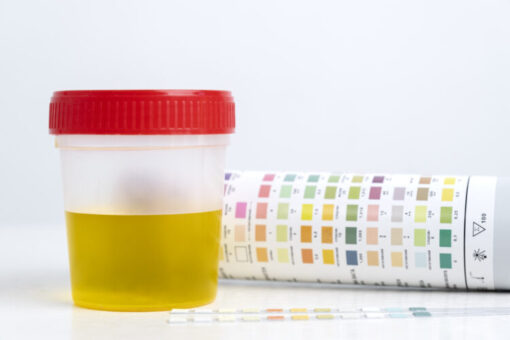
- Urine test for alcohol: Provides reliable detection for multiple drug classes with easy collection and transport
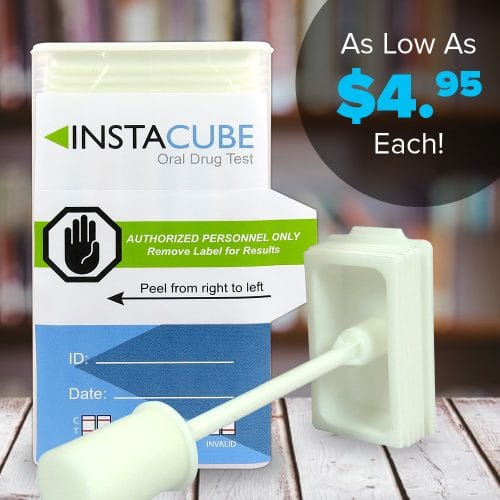
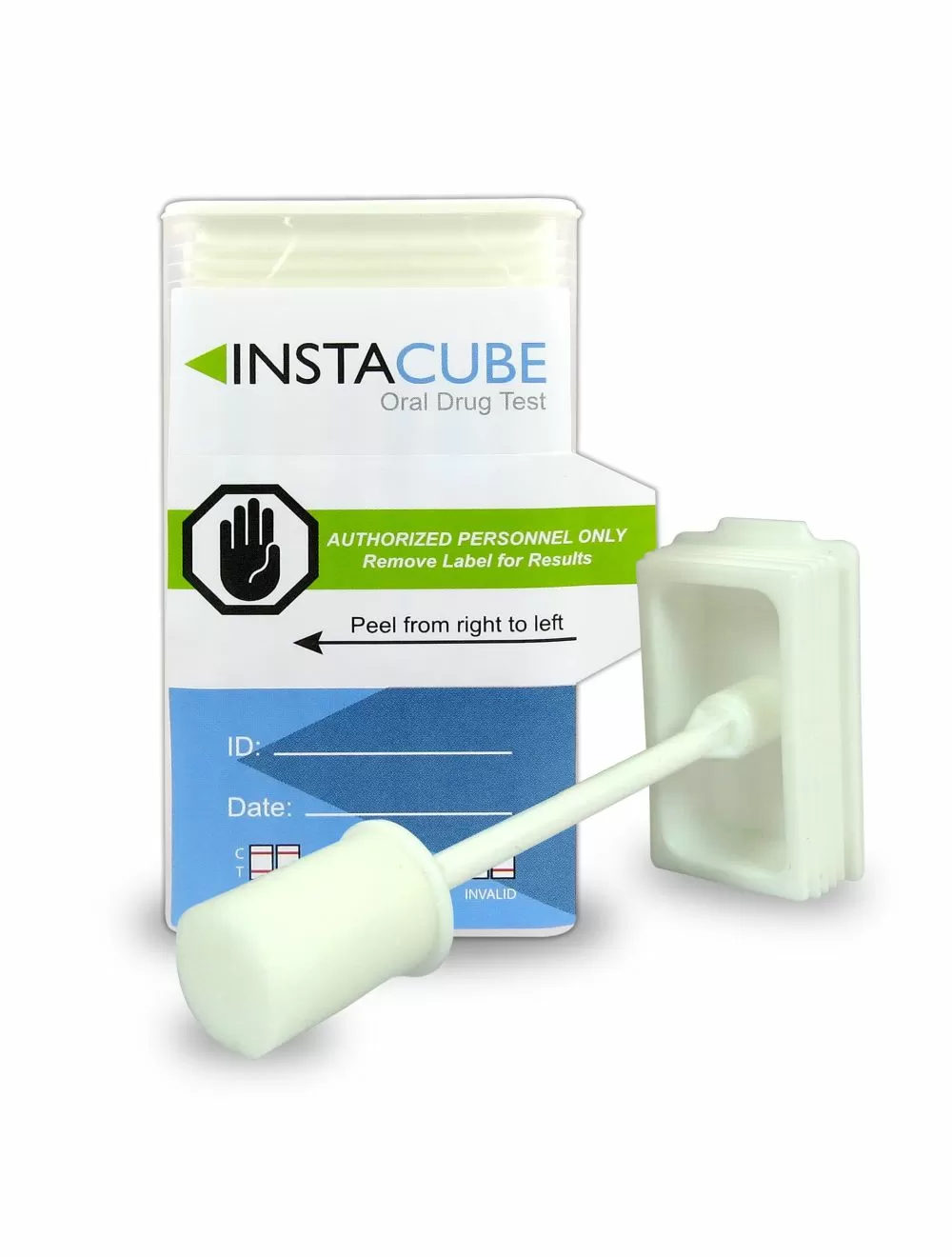
- Oral fluid drug tests: Offer non-invasive collection with shorter detection windows for recent use
- Alcohol screening devices: Include breathalyzers and saliva-based devices meeting DOT accuracy standards
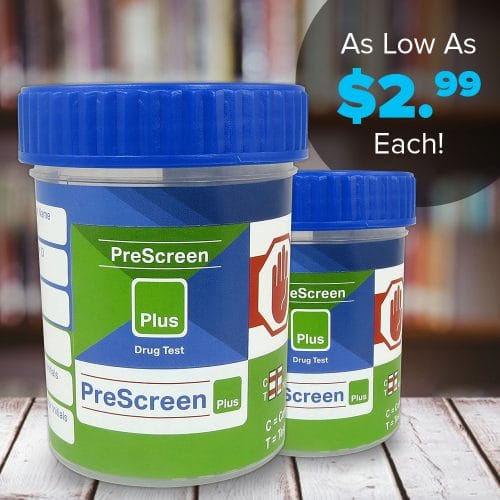
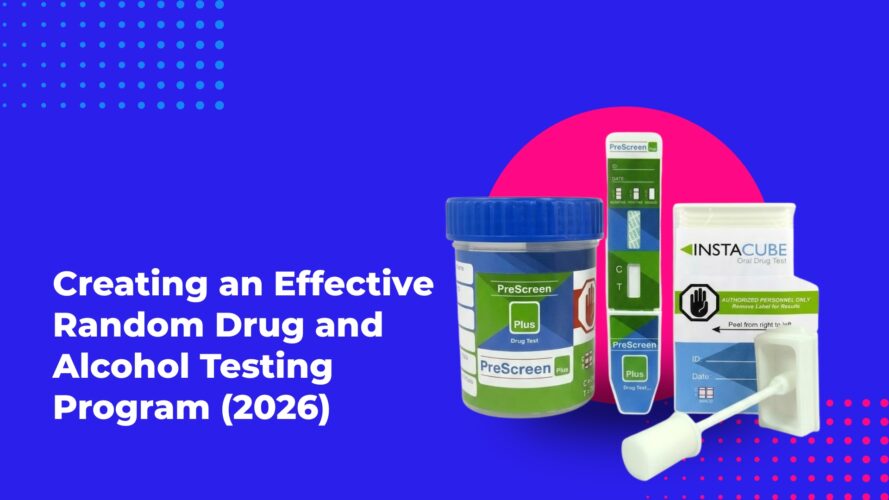
For employers looking to stock a full range of compliant testing supplies, DrugTestsInBulk offers wholesale discounts on urine cups with adulterants for drug tests, oral fluid tests, and mouth swab alcohol tests, designed for both DOT and non-DOT workplaces.
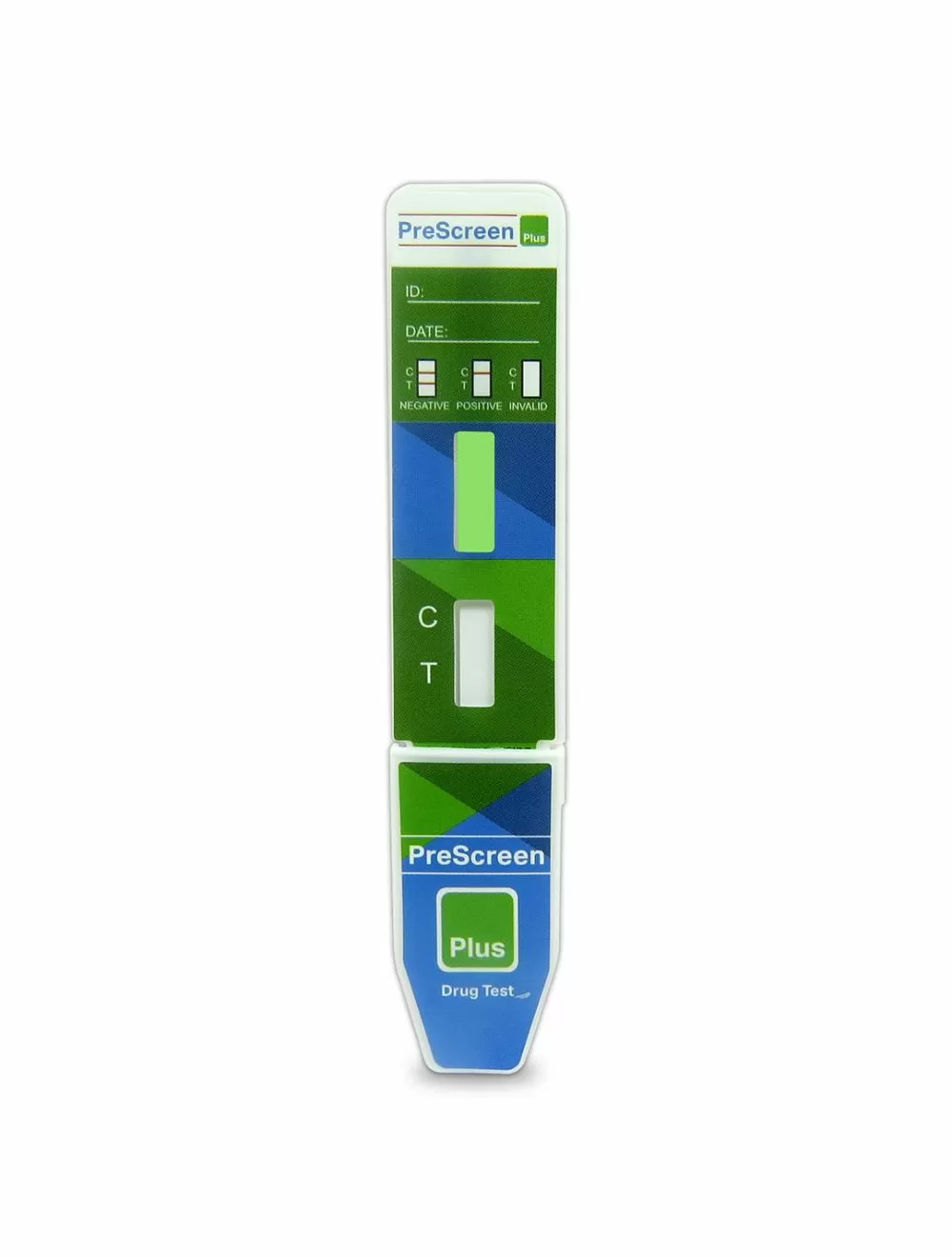
PreScreen Plus Ten Panel (10-Panel) Cup With Alcohol (FUO)
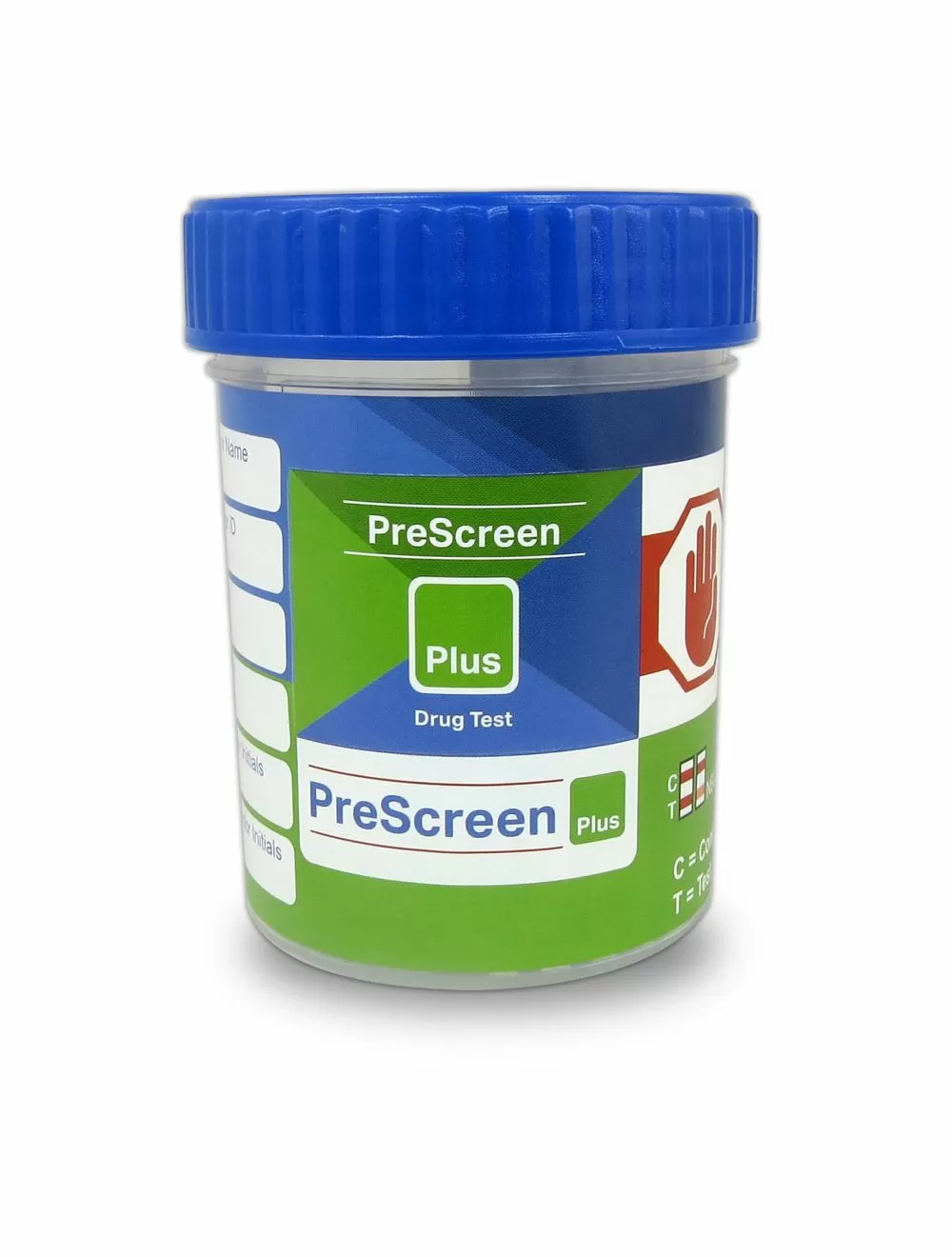
Detects: ALC, AMP, BAR, BZO, COC, MET, MTD, OPI, OXY, PCP, THC
How Employers Should Handle Random Drug and Alcohol Testing Issues
Even well-managed programs occasionally face challenges. Clear procedures help employers respond consistently and fairly.
Employee Rights During Random Drug and Alcohol Testing
Employees retain several rights during the testing process:
- Right to privacy during sample collection
- Right to clear policy disclosure
- Right to dispute inaccurate results
- Protection under applicable labor laws
Respecting these rights strengthens the legitimacy of the random drug and alcohol testing program.
State Drug Testing Laws and Employee Privacy Protections
Drug testing is governed by a patchwork of state and local regulations. Certain jurisdictions require specific notices, restrict which roles may be tested, or cap the percentage of random selection. In areas with strict privacy laws, non-safety-sensitive employees may be exempt from random drug testing entirely.
What Happens if an Employee Refuses a Random Drug Test?
Refusing a test is generally treated as an immediate violation of company policy. The employer should restate the policy, explain the consequences, and confirm the refusal in writing. The employee should be removed from safety-sensitive duties immediately, and, depending on policy, a refusal typically carries the same consequences as a failed test.
What Employers Should Do After a Failed Drug or Alcohol Test
A failed drug or alcohol test should be handled in accordance with the employer’s written policy and applicable laws. Before taking action, employers should verify the result, review testing procedures, and document all steps to support a fair and compliant decision.
- Immediate Suspension: Remove the employee from the worksite immediately.
- Review Protocol: Ensure the testing facility followed chain-of-custody procedures.
- Offer Assistance: Depending on company policy and local laws, employers may offer an EAP, rehabilitation, or a last-chance agreement before terminating.
Confirmatory Drug Testing and False Positive Procedures
Employees have the right to dispute results. When an employee disputes a positive result, employers should follow a clear confirmatory testing process before making a final decision.
- GC/MS Testing: Standard initial screenings should always be backed by a Gas Chromatography/Mass Spectrometry confirmatory lab test for 100% accuracy.
- Review Period: Allow the employee time to consult with a Medical Review Officer (MRO) to verify whether prescription medications caused the anomaly.
- Retesting: If a false positive is proven, the employer should cover costs, restore the employee to duty, and expunge the record.
Return-to-Duty and Follow-Up Drug Testing Requirements
For employees retained under a last-chance agreement, a structured return protocol is essential. The employee must be evaluated by a Substance Abuse Professional (SAP), pass a negative return-to-duty test, and then complete a strict schedule of unannounced follow-up testing — often for up to 12 months or more.
How Employers Should Handle False Alcohol Accusations at Work
Employees who remain employed after a positive result typically must complete a structured return-to-duty process.
This often includes:
- Substance abuse evaluation
- Required treatment recommendations
- Negative return-to-duty test
- Ongoing follow-up testing
These measures support workplace safety and monitor ongoing compliance.
HR Documentation and Workplace Investigation Best Practices
Thorough documentation supports legal compliance and organizational consistency. HR teams should maintain records of observations, testing events, investigations, and disciplinary actions.
Strict confidentiality and secure storage practices remain essential throughout the entire process.
DOT vs Non-DOT Random Drug Testing Requirements
Not all testing programs operate under the same rules. Employers must understand whether their workforce falls under DOT or non-DOT regulations.
DOT Random Testing Rules
Under the U.S. Department of Transportation, 49 CFR Part 40 strictly governs testing.
- Mandatory Pools: Only safety-sensitive employees, with DOT and non-DOT pools kept completely separate.
- Testing Frequency: Unannounced random testing must occur throughout the year, spread evenly across all operational hours.
- Designated Employer Representative (DER): A specific DER must manage the program — this role cannot be outsourced.
- Specimen Requirements: Lab-based urine tests only; rapid point-of-contact tests are strictly prohibited.
- Substance Panel: Tests must cover five drug classes: marijuana, cocaine, opioids, amphetamines, and PCP, typically using a DOT 5-Panel Urine Drug Test.
Non-DOT Workplace Testing Policies
Non-DOT drug screening refers to company-driven policies outside federal transportation authority.
- Policy Customization: Employers may choose any testing method, panel, or procedure, as long as it complies with state and local employment laws.
- Flexibility in Specimens: Non-DOT tests can use urine, hair, saliva, or breath depending on company policy and state law.
- Expanded Drug Panels: Non-DOT tests frequently use 7, 9, or 10-panel configurations to screen for prescription misuse such as benzodiazepines and barbiturates.
- RELATED: DOT vs Non-DOT Drug Testing: What Employers MUST Know (2026 Compliance & Buying Guide)
Key Compliance Differences
Managing DOT and Non-DOT programs requires understanding their distinct requirements.
| Feature | DOT Testing Program | Non-DOT Testing Program |
| Regulatory Authority | Federal regulations | State and local laws |
| Testing Procedures | Strictly standardized | More flexible |
| Testing Pools | Safety-sensitive employees only | Employer-defined |
| Documentation | Federal forms required | Company procedures |
| Alcohol Testing | Federally regulated | Optional in many cases |
| Record Retention | Specific federal requirements | Employer and state requirements |
Testing Rate Requirements by Industry

Employers in DOT-regulated industries must meet specific annual rates for random drug and alcohol testing established by federal agencies. These minimum testing percentages help maintain workplace safety and ensure compliance with industry regulations.
- Federal Motor Carrier Safety Administration (FMCSA): 50% for drugs, 10% for alcohol.
- Federal Aviation Administration (FAA): 25% for drugs, 10% for alcohol.
- Federal Railroad Administration (FRA): 25% for drugs, 10% for alcohol.
- Federal Transit Administration (FTA): 50% for drugs, 10% for alcohol.
- Pipeline and Hazardous Materials Safety Administration (PHMSA): 50% for drugs.
Best Practices for Managing a Random Drug and Alcohol Testing Program
Successful programs balance regulatory compliance with fairness, consistency, and respect for employees to maximize deterrence while minimizing legal risks.
Maintaining Consistency, Fairness, and Compliance
Random selections must always be generated through an unbiased process. Applying policy requirements consistently helps protect employers from discrimination claims and compliance violations.
Using Third-Party Administrators for Random Testing Programs
Many employers use third-party administrators to manage random selections, notifications, and testing coordination. External administration can improve efficiency and reduce administrative burdens.
Training Supervisors on Drug and Alcohol Testing Procedures

Supervisors play a critical role in workplace testing programs. Regular training helps them understand testing requirements, documentation standards, and appropriate response procedures.
Protecting Employee Privacy During Random Testing
Privacy protections should remain a priority throughout the testing process. Notifications should be discreet, and employers should share test information only with authorized personnel.
Secure Recordkeeping and Testing Documentation
Employers should store all testing records securely and limit access to designated personnel. Proper recordkeeping supports compliance, audits, and workplace investigations when necessary.
Key Takeaways for Building a Compliant Random Drug Testing Program
A successful random drug and alcohol testing program requires clear policies, fair employee selection methods, reliable testing procedures, and consistent documentation practices. Employers should align their programs with applicable federal, state, and industry requirements while protecting employee privacy and maintaining confidentiality. By combining compliance-focused policies, proper training, and dependable testing resources, organizations can create a safer workplace and strengthen their overall risk management strategy.
FAQ About Random Drug and Alcohol Testing
Can Employers Randomly Drug Test Employees?
Yes. Many employers can conduct random drug testing when supported by a written policy and permitted by applicable laws. Requirements vary by state, industry, and job classification.
What Are DOT Random Drug Testing Time Limits?
DOT random drug testing time limits generally require employers to notify selected employees and complete testing as soon as reasonably possible after notification. Delays can affect program compliance and testing integrity.
How Often Are Random Drug Tests Done at Work?
Most DOT-regulated programs require at least quarterly selections, spread evenly throughout the year. Non-DOT programs vary, but best practice is at least quarterly testing to maintain unpredictability.
What Drugs Are Tested in Random Drug Screening?
A random drug screening covers a standard 5-panel drug test: marijuana (THC), cocaine, amphetamines, opioids, and phencyclidine (PCP). Non-DOT employers may add panels for benzodiazepines, barbiturates, or other substances.
How Does Random Alcohol Testing Work?
Random alcohol testing uses breathalyzers or saliva devices to measure blood alcohol concentration before, during, or after safety-sensitive duties. Testing occurs only when employees are on duty or performing safety-sensitive functions, with positive results typically defined as a BAC of 0.02 or higher.
What Happens if You Fail a Random Drug Test at Work?
Consequences vary based on company policy, job responsibilities, and applicable laws. Outcomes may include suspension, rehabilitation requirements, return-to-duty testing, or termination.