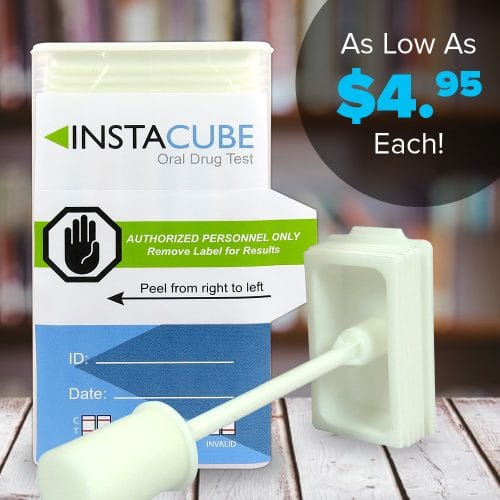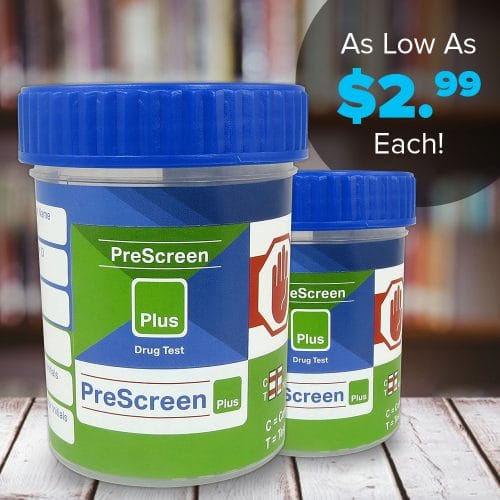
Rapid drug tests give employers a fast, practical way to screen for drugs in the workplace without waiting days for lab processing. These point-of-care solutions help organizations quickly identify potential substance use through urine, saliva, and multi-panel testing options, while supporting efficient hiring, compliance, and employee safety programs.
Quick Answer: Rapid drug tests are efficient point-of-care tools offering on-site screening results within minutes. They detect recent substance use in biological samples, improving workplace safety and reducing medical monitoring costs.
In This Guide
- What Are Rapid Drug Tests?
- How Much Do Rapid Drug Tests Cost?
- Understanding Rapid Drug Test Results
- Which Rapid Drug Test Panel Should You Choose?
What Are Rapid Drug Tests?
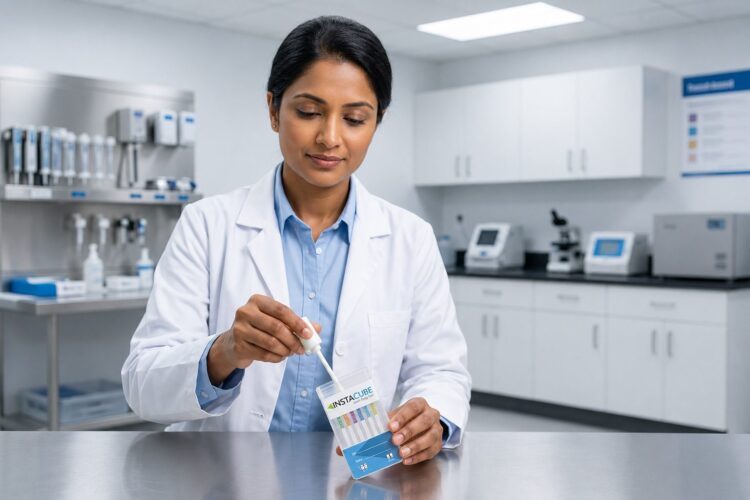
Rapid drug tests, also known as point-of-care (POC) tests, are screening devices that detect illicit substances or prescription medications in biological samples. Unlike laboratory tests that take days to process, instant drug testing devices use immunoassay technology to deliver on-site results within minutes.
For employers who need same-day drug testing for pre-employment or random screening, this quick turnaround makes it easy to keep hiring and safety programs on schedule.
Common sample formats used in instant screen drug tests:
A negative result clears the individual immediately. A non-negative result requires secondary verification through a laboratory confirmatory method such as Gas Chromatography-Mass Spectrometry (GC/MS).
How Much Do Rapid Drug Tests Cost?
Rapid drug tests generally cost between $5 and $50 per test when purchased individually or in small quantities. The final price depends heavily on whether you’re buying single-use kits for on-site testing or paying a third-party lab to run the screening.
Pricing varies by panel size, certifications, and order volume, so it pays to compare options before committing to a supplier. DrugTestsInBulk (DTIB) offers competitive pricing across panel sizes and order quantities, making it easy to find a cost-effective option for your organization’s needs.
What Affects the Cost of Rapid Drug Tests?
Several factors can influence the price of an instant drug testing program:
- Panel Count: Tests screening for basic substances (like 5-panel drug test kits) cost less than comprehensive 10-panel or 12-panel options.
- Certifications: FDA-cleared and CLIA-waived tests may offer added value for organizations that need specific testing capabilities.
- Test Type: Urine drug test cups are generally the most affordable, while saliva swabs carry a slight premium.
- Built-in Adulterants: Cups with integrated strips to check for specimen tampering, pH levels, and oxidants cost slightly more than standard cups.
- Order Volume: Smaller order sizes increase the per-test price.
How Rapid Drug Tests Reduce Workplace Costs
Implementing an instant drug screen program significantly lowers overall corporate expenses compared to traditional laboratory screening. Businesses save money by eliminating extended employee downtime and administrative delays.
- Zero lab fees on negative results
- Reduced downtime, since employees return to work immediately
- Lower shipping fees, since there’s no need to overnight specimens
- Fewer accidents, as fast screening deters workplace substance abuse
- Streamlined hiring, since HR onboarding accelerates without long waits
Why Buying in Bulk Saves Money
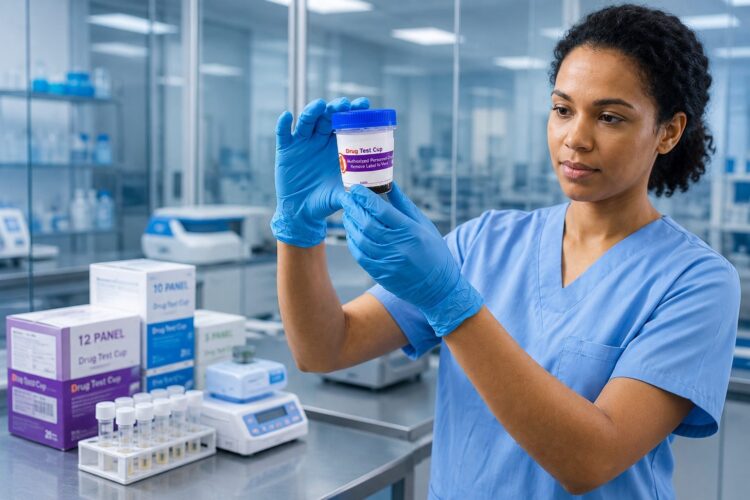
Purchasing rapid drug tests in bulk can reduce the average cost per test and make recurring testing expenses easier to plan. This is especially useful for employers, healthcare organizations, testing providers, and other customers who conduct regular screening. Instead of repeatedly purchasing small quantities whenever supplies run low, organizations can maintain an inventory that supports their expected testing volume.
DrugTestsInBulk (DTIB) offers professional and home drug testing kits in a variety of formats, including multi-drug urine test cups, dip cards, and oral fluid tests, with bulk pricing that lowers per-test costs as order volume increases. Customers can also benefit from free shipping on orders over $75, a price-match guarantee, training through DTIB University, and a wide selection of panel configurations to meet different testing needs.
Understanding Rapid Drug Test Results
Rapid drug screening devices provide quick visual results that employers can review shortly after sample collection. Understanding how to interpret results is important for maintaining accurate workplace documentation.
How Long Do Results Take?
Results from a rapid drug test typically appear within 5 to 10 minutes after you apply the biological sample (such as urine or saliva) to the test device. If the preliminary result is non-negative, laboratory confirmation can take 24 to 72 hours.
How to Read Rapid Drug Test Results
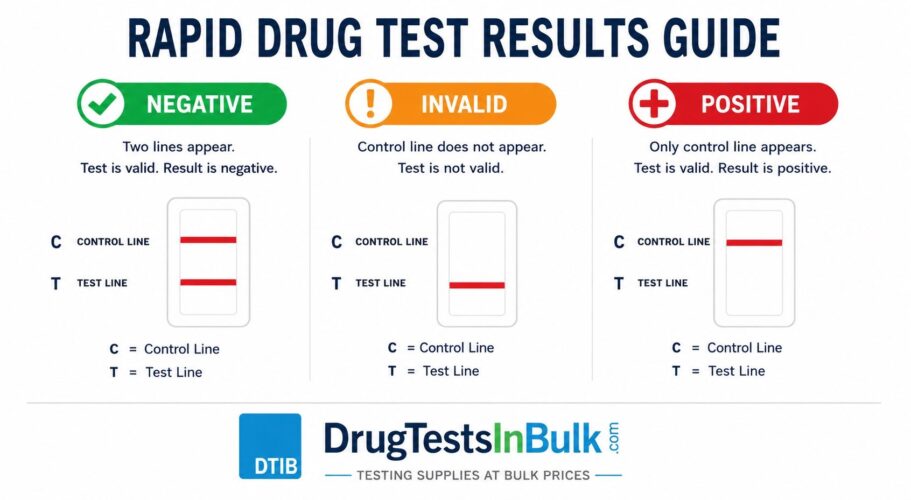
Reading a rapid immunoassay test involves checking the indicator window for control and test lines:
- Negative Result: Two distinct colored lines appear, one in the control region (C) and one in the test region (T). Even a faint test line indicates a negative result.
- Presumptive Positive Result: Only one colored line appears in the control region (C), with no line in the test region (T).
- Invalid Result: No line appears in the control region, indicating the device is defective or was used incorrectly, and the test must be repeated with a new kit.
What Is a Rapid Drug Test Results Form?
A rapid drug test results form is a legal paper trail that tracks the specimen from collection to final interpretation. For official workplace programs, this is often a multi-part Chain of Custody Form (CCF) divided into these sections:
- Donor information (name, ID number, date of collection)
- Test details (date, time, and brand of kit used)
- Result marks (negative, positive, or invalid)
- Signatures from the tester and the donor
For organizations conducting frequent on-site screenings, DrugTestsInBulk provides Onsite Drug Test Forms that create a consistent paper record of workplace testing activities.
Which Rapid Drug Test Panel Should You Choose?
Selecting the right testing panel depends on workplace risks, industry requirements, and the substances an organization needs to monitor.
5-Panel vs. Extended Panels (10–22)
The number of substances screened indicates the panel size, and workplaces should choose the panel size that best aligns with their safety requirements and budget.
- 5-Panel Drug Test: This is the industry standard for most private employers and federally mandated (DOT) roles. It screens for Marijuana (THC), Cocaine (COC), Amphetamines (AMP) / Methamphetamines, Opiates (OPI) / Opioids, and Phencyclidine (PCP).
- Extended Panels (10 to 22-Panel): These expand well beyond the standard five drugs. A 10-panel drug test usually adds Barbiturates, Benzodiazepines, Methadone, Methaqualone, and Propoxyphene. High-risk or comprehensive 12- to 22-panel tests target specific synthetic drugs, such as Fentanyl, K2/Spice, Tramadol, and specific club drugs.
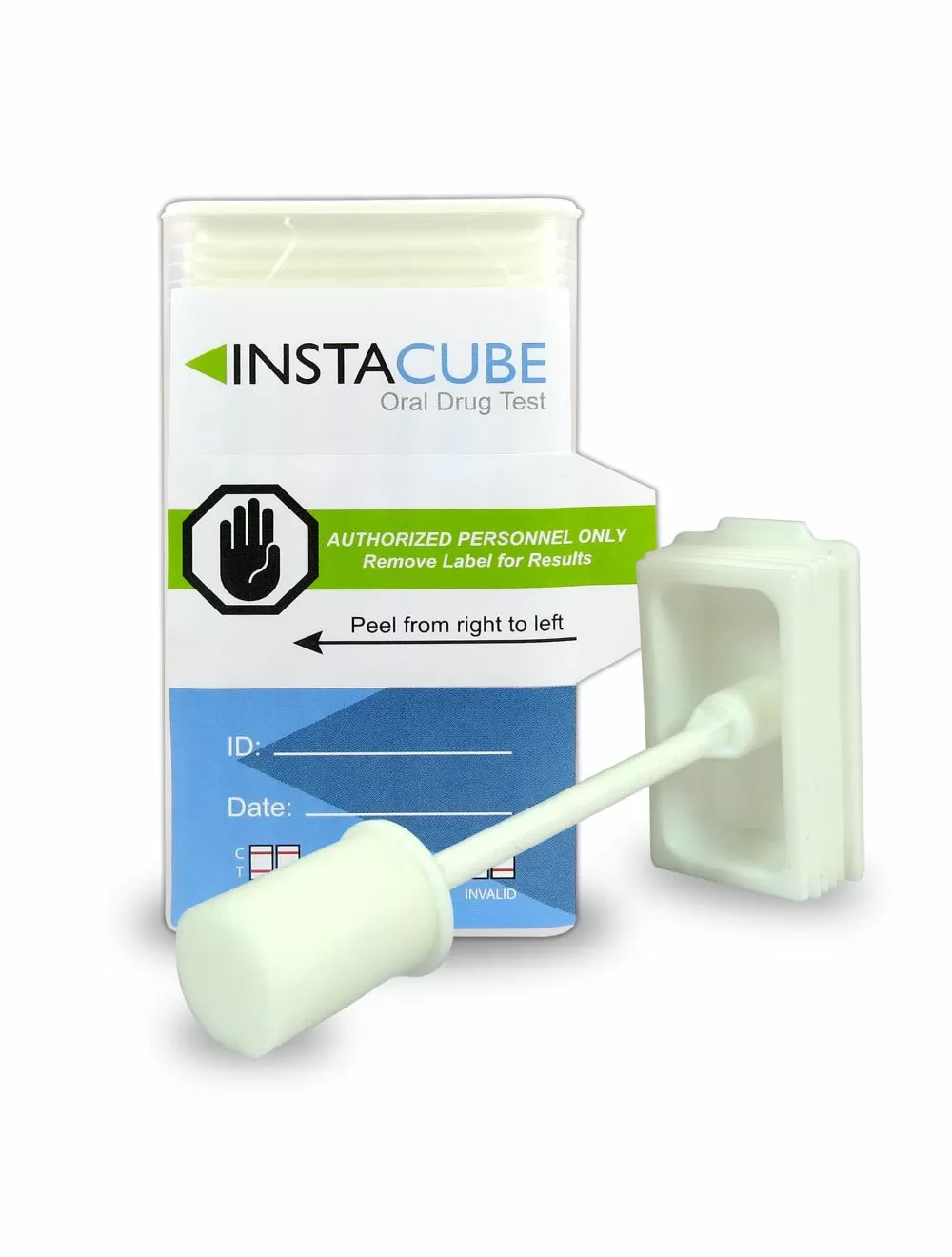
For broader screening, DrugTestsInBulk (DTIB) offers rapid testing options in multiple formats, including oral fluid tests, dip cards, and multi-panel urine cups:
Ten Panel PreScreen Plus Dip Card (CLIA Waived)
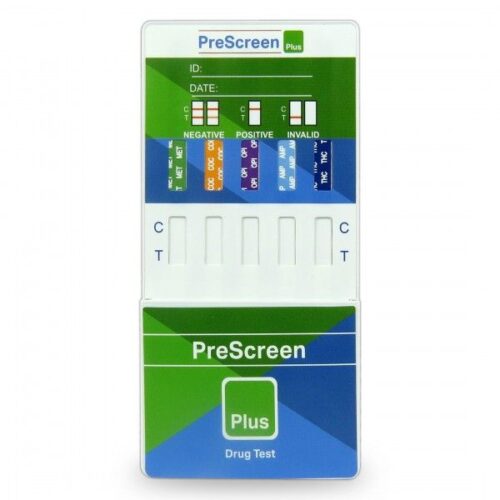
Detects: AMP, BAR, BZO, COC, MET, MTD, OPI, PCP, TCA, THC
20 Panel Drug Test Cup w/ Adulterants (FUO)
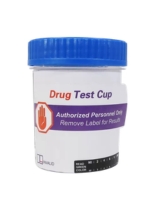
Detects: KRA, AMP, BAR, BUP, BZO, COC, ETG, FEN, K2, KET, MET, MDMA, MTD, OPI, OXY, PCP, THC, TRA
For organizations spending $95 or more on dip cards and/or cassettes, DrugTestsInBulk offers a free collection cup with a temperature strip. This provides a convenient specimen-collection option for use with the dip card.
Choosing the Right Rapid Drug Test for Your Workplace
Selecting the right panel and test format requires evaluating the specific risks and needs of your organization:
- Assess risk levels: Use standard 5-panel tests for general or DOT-regulated positions. Choose 10-to-12+ panel tests for safety-sensitive roles, healthcare settings, or environments where prescription medication misuse is a concern.
- On-site convenience: Instant on-site oral fluid or urine tests are ideal for random testing or reasonable suspicion because they eliminate the need to send an employee to an off-site laboratory.
- Legal & defensibility needs: While rapid tests are 99% accurate in preliminary assessments, official actions generally require SAMHSA 5 Workplace Drug Testing Resource validation and Medical Review Officer (MRO) approval.
- Cost vs. capability: Basic 5-panel tests are cheaper and ideal for routine pre-employment, while 10-panel tests cost only slightly more but provide much broader visibility into prescription medication misuse.
Frequently Asked Questions About Rapid Drug Tests
Are Rapid Drug Tests Accurate?
Yes, rapid drug tests are generally around 99% accurate for preliminary screening when used correctly. Non-negative results should always be confirmed with laboratory testing before any final action is taken
Are Rapid Drug Tests Accepted for Workplace Screening?
Yes, most private employers accept rapid drug screen results for pre-employment, random, and reasonable-suspicion testing. Federally regulated DOT positions, however, require lab-based confirmation and MRO review regardless of the initial rapid result.
When Is Laboratory Confirmation Needed?
Laboratory confirmation is required any time a rapid test returns a non-negative or invalid result, or when a workplace policy mandates it for legal defensibility. Confirmatory testing through methods like GC/MS verifies the initial finding before disciplinary or employment decisions are made.